
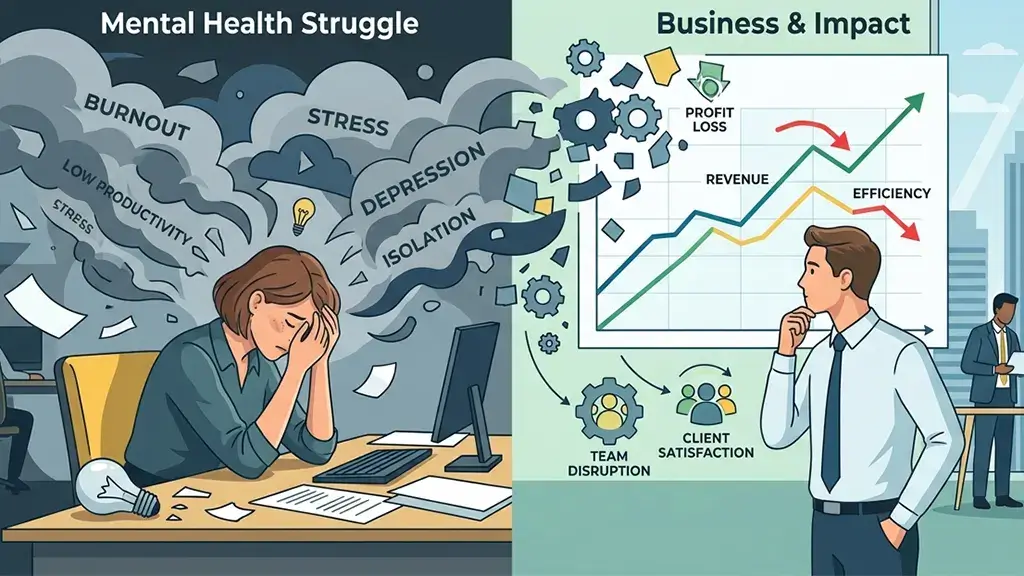
Whenever we work in any workplace, it’s always connected to the human mind whether it’s a small or a big company. It’s always a game of the mind, which reflects the mental health of employees. Mental health in the workplace describes a person’s ability to do tasks and put in efforts to accomplish results.
This mental state can trigger emotional distress, psychological load, and social battery, which directly affects how they interact with their targets. It shapes how they feel, think at work or pursue the careers they choose. In recent times, several studies show that business depression is a rising concern due to the lack of a stress free environment, heavy caseloads and high pressure work-spaces.
Acknowledging mental health proactively not only promotes employee wellness but also cultivates morale, enhances productivity and establishes prolonged business growth.
Table of Contents
Poor Mental Health Barriers in the Workplace
In any workplace, employees with poor mental health cannot proceed with their full potential. Like how does mental health affect work performance? Understating the causes of a poor mind set will badly impact the employee’s stability and ability of working.
Leading to common conditions like Stress, Anxiety, Depression or panicking in performance. One of these issues are relatively major burdens including intense work demands, late sitting, short timeframes, extended screen time without breaks, and a toxic work environment.
With these complications employees may feel undervalued, overwhelmed, neglected or even worthless to mental strain.
Business mental health is more important than performing the workload without being lacking concentration and motivation. After highlighting the issues regarding business mental health, we can now create the key impact on how to promote a healthy work environment and maximize productivity. In simple words, a healthy mental state is linked to strong business performance.
Lack of Productivity and Creativity Leads to Business Loss
Poor mental health of an employee’s performance can be substantial. Reduced productivity simply affects creativity and concentration.
Based on studies by US researcher Psychiatric Association, claimed unmanaged depression reduces productivity by 35% and affects the US economy by $210.5 billion every year in the form of inactive productivity, medical expenses, and absenteeism. In short, no business growth.
In fact, employees dealing with business depression rarely show up proficiently, averaging 31.4 days of work missed per year.
The conditions such as anxiety and chronic stress make the employees more tired mentally and physically. As a result of which the employee cannot be attentive, leading to less engagement and inaccuracies.
Mental health in business can influence the creative minds and competence. We have evidence from the recent Qualtrics study showing that employees dealing with mental health demands more focus and efforts to complete their target within time.
But if they discuss positive mental health in business, they can play a crucial role in a depressed environment with their skills and productivity and be more groundbreaking. Employees with optimistic outlook and upbeat mentality invest their 23% less energy on creative endeavors than those who were dealing with mental health.
Well, through observation, we noticed how this mental health and productivity in the workplace shows the big difference of any employee’s reliability. At first employees may not feel pressure but gradually they started to feel numb towards tasks. If employers realize how productivity could be better if an employee’s mental health improved. Studies show that providing a healthy workplace with support, courage, medication, skill training results in highly active working and job satisfaction. 80% treated employees report better mental health and showing great efficiency.
The Effect of Mental Health on Workplace Culture
Employees with poor mental health can bring up profound effects on workplace culture. When employees continuously face stress, anxiety, or depression, resulting in low energy, decreased team spirit, no confidence left, zero motivation.
At that moment the employee lost its spark and witnessed a lack of passion towards organizational goals. Also, Mental health difficulties in business can make employee impediments to progress, hard to communicate and not bringing the team along.
Over a period of time, these issues develop into high dispute within team management, frustration, disagreement or tension between co-workers.
Research suggests, any workplace that is gathered with poor mental health often encounters increased levels of personal conflict, avoiding teamwork and lessened organizational solidarity. That’s why the importance of mental health in the workplace is now a goal. Alternatively, we have therapy sessions for employees where they can build their confidence back, upgrade mental health, go for open communication leading the tasks professionally, and programs can help in maintaining a positive attitude in the workplace culture. Also boost team dynamics, and encourage both employee fulfillment and productivity.
Financial Impact on Business
In every business, one major concern is the impact on financial costs. We just need to figure out how this poor mental health affects the financial costs? Poor mental health in businesses creates a huge considerable impact on financial costs.
One of the most immediate effects is absenteeism and presenteeism. Because where employees either demonstrate irregular work attendance or the employee is present but underperforms, they’re not working up to their potential resulting in decreasing overall productivity.
Moreover, due to this issue organization have to face high employee turnover rate, as the employees experiencing stress, weariness, or exhaustion due to this they have to leave their jobs.
This brings about elevated recruitment, hiring, and training costs and puts more pressure on the company’s resources. Also, poor mental health promotes growth in healthcare and salary costs. As employees may need medical attention, therapy, or extended leave.
These combined effects not only play a role in business costs but also risk efficiency, growth and profitability. Therefore, if organizations prioritize employee’s mental health, they can reduce burdens and minimize the effects on business growth.
Business Consequences of Poor Mental Health
Poor mental health or business depression can cause damage for long-run business consequences. One impact is a severe damage to a company’s reputation status.
When employees are disengaged, bearing a stressful atmosphere, or underperforming due to mental health difficulties, the work quality drops and customer service starts to suffer.
Ultimately this will trigger clients and employee’s connection. Therefore, poor mental health affecting work performance and causes the high risk of reduced innovation and mind growth.
As employees dealing with depression often lose their creativity, analytical ability, and motivation to engage in new skills.
Later on, this impasse holds the company’s expertise to design new strategies, service or progress, overall damaging growth.
Additionally, poor mental health can lead to damage of competitive advantage. Organizations that fail to prioritize employee mental health may face difficulty in recruiting and retaining talent, while other competitors with healthier workplace continue to do better and upgrade their performance.
Solutions and Strategies in the Workplace
We have discussed basic concerns related to poor mental health that are affecting the business growth. Now see what we have to overcome from it like what solutions and strategies we should apply to employees to make the environment better and engaging.
One of the most useful approaches is fostering balance between work and life, making sure employees have plenty of time or a break to reboot themselves, rest or manage personal responsibilities. Balanced tasks and manageable workloads can reduce the stress levels and prevent exhaustion.
Mental Health Support Program
Offering available mental health programs is another must-have strategy. This includes counseling services, employee assistance programs (EAPs), Work-life balance initiatives that help employees to overcome stress, anxiety and depression. When help is readily available to every employee, they are more likely to ask for support before problems escalate.
Stimulating open communication boosts a workplace culture and strengthens reliance where employees feel at ease in discussing mental health concerns without hesitation or fear of judgement. leaderships that are based on transparency and empathy build a positive and trusting workplace.
Eventually, training leaders on mental health awareness ensures that team leaders can recognize the patterns of employees’ mental health, support them and implement flexibility when needed. Qualified and empowered leaders play a huge role in supporting employee’s workplace well-being, building resilient and strengthening team performance. Executing these strategies not only brings back employee strength but also enhances productivity, credibility, and long-term business success.
Key Takeaways
Poor mental health in the workplace can impact productivity, creativity, employee strength, while also raising the risk of absenteeism, turnover, and financial costs. It also damages workplace culture, innovation, mind growth, and tarnishes a company’s reputation and competitive edge. However, we have ways to manage these through strategies and solutions like work-life balance initiatives, available support programs, open communication about mental health, leaders with supportive behavior and a resilient workforce. Empowered employees are more calm, productive, dedicated, creative and motivated, promoting long term success. Investing in employee mental well-being is not just a moral responsibility but also a strategy of growing business that guarantees success, innovation and positive workplace culture. To summarize, healthy employees are directly proportional to a successful business.


